Mike Saad
New York institute of Technology, School of Architecture and Design: Architecture, Computational Technologies, M.S. , msaad06@nyit.edu
Abstract:
The role of an Architect extends beyond traditional building design, encompassing diverse disciplines shaped by continuous innovation and technology. This paper explores the evolution of Architecture, tracing its transformation through Engineering, Arts, and Science, influenced by communication tools and technological advancements. The journey unfolds from early CAD/CAM systems in the 1960s to the present era of Machine Learning (ML). ML, a communication tool, emerged in the 20th century, transforming architectural processes. The paper delves into the background of ML, its categories, and its integration into architecture. From Parametric Design to Generative Design, ML has redefined architectural creation, offering tools like Midjourney, Finch, and Architectures. These tools empower architects with AI-driven design options, generating variations swiftly and efficiently. The intersection of ML and simulation enhances structural intuition, enabling predictions in complex simulations. The paper emphasizes ML’s assistance across the architectural spectrum, from planning to construction, bringing a paradigm shift from intuition-based designs to data-driven decisions. As ML becomes integral to architectural workflows, it opens new possibilities, prompting a shift towards a more scientific approach. The paper concludes by envisioning future developments, emphasizing the potential of 3D integration and ML’s role in generative design processes, ensuring a dynamic future for architecture.
1.Introduction
The role of an Architect was never bound just to buildings. The word ‘Architecture’ has been found across different disciplines, and that is due to the process in which the Architect has to go through in order to get to the desired outcome.
The Architecture profession combines Engineering, Arts and Science. This profession has never been stable, exerting a reciprocal relationship between Innovation and Technology. Architects are right now “the so-called mediators between different professions and they have to monitor the progress of the project from its initial stages onwards” [1] (p.41). Communication being an ability and a tool that an Architect Acquires throughout his career has been subject to many changes and evolution throughout the years.
Computers working on binary systems took this communication to a whole new level.
New techniques of communication and modeling extensively affected the architect’s work” [2] (p.7). This is caused by the emergence of Information Technology and later BIG Data triggering the inception of those tools.
They vary widely between countries, but all can be categorized under CAD/CAM, Computer aided Design and Computer Aided Manufacturing taking presence in the 1960s. The first software to pave the way was Sketchpad by Ivan Sutherland developed in 1957.From 2D to 3D, emerging in the 1980s, software started being available to develop drawings to the next level in representation and communication. Soon after that, BIM came to life, through various software starting from 1980s.
The fourth era is Computational Design or algorithm-based design process. Parametric architecture, Generative Design, Geometric Rationalization, Form Finding, Programmatic Analysis, Network Analysis, GIS, Solar Access, and Daylight analysis are the result of the development of Computational Design. Computational Design flourished and was widely used by architects after the development of Grasshopper by David Rutten which is a visual programming-based software with scope for coding in platforms like Python & C# [3].
The fifth, and present era is Machine Learning, which is partly based on computational design development. Machine learning combines data through a range of algorithms, pattern recognition, neural networks, generative design, artificial intelligence, etc. [3].
While architectural computation is currently in the throes of a revolution with the advent of Building Information Modeling (BIM) technologies, little is said of AI methods.
This paper aims to present Machine Learning as a tool of communication that emerged in the 20th century, its extent in the world of Architecture, how it is being used now, and how this paradigm might change in the future.
2.Body
Machine learning was first used in 1956. It was defined as the ability to teach machines how to learn without being programmed [10].
Background to Machine Learning
Machine learning algorithms and functions can be categorized into different sections. Supervised learning, Unsupervised learning, Semi Supervised learning, and Reinforced Learning.
Supervised learning, where basically an algorithm is trained and in the end of the process we pick the function that best describes the input data, the one that for a given X makes the best estimation of y. [6]
Unsupervised learning, here there’s no teacher at all, actually the computer might be able to teach you new things after it learns patterns in data, these algorithms a particularly useful in cases where the human expert doesn’t know what to look for in the data.
Semi Supervised Learning, in many practical situations, the cost to label is quite high, since it requires skilled human experts to do that. So, in the absence of labels in the majority of the observations but present in few, semi-supervised algorithms are the best candidates for model building.
Reinforced Learning, method aims at using observations gathered from the interaction with the environment to take actions that would maximize the reward or minimize the risk. Reinforcement learning algorithm (called the agent) continuously learns from the environment in an iterative fashion. In the process, the agent learns from its experiences of the environment until it explores the full range of possible states.
The first step in a typical machine learning workflow is training—the process of passing training data to a model so that it can learn to identify patterns. After training, the next step in the process is testing how your model performs on data outside of your training set. This is known as model evaluation. You might run training and evaluation multiple times, performing additional feature engineering and tweaking your model architecture. Once you are happy with your model’s performance during evaluation, you’ll likely want to serve your model so that others can access it to make predictions. We use the term serving to refer to accepting incoming requests and sending back predictions by deploying the model as a microservice. The serving infrastructure could be in the cloud, on-premises, or on-device[9].
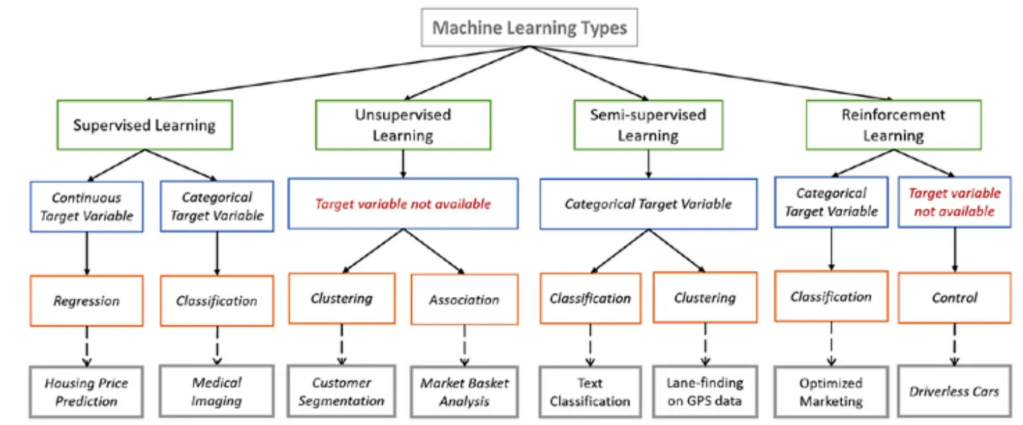
Note. This image from en.proft.me
The data you use to train your model can take many forms depending on the model type. We define structured data as numerical and categorical data. Numerical data includes integer and float values, and categorical data includes data that can be divided into a finite set of groups, like type of car or education level. Common challenges in machine learning tend to revolve around data quality, reproducibility, data drift, scale, and having to satisfy multiple objectives.[9]
Machine Learning in Architecture
Machine learning was introduced in the Architectural profession in its early stages as Parametric design in the 2000s. Later, it started being used or design optimization purposes through optimizing building form and function for energy efficiency.
The building profession is in a radical shift of paradigm from architectural representations of unconnected data to practices with an overwhelming amount of information rich data. These emerge as designers are increasingly including data from external sources and collaborators within their models, such as urban, climate or 3D scanning data, as well as from data that is created internally within the practice or project, generated through scripting for simulation or coming in vast amounts through sensors [4] (p.1).
The topic of data is central in any machine learning application. Because data and their structure will strongly influence final outputs: a neural network, for example, will become very able to distinguish a cat, only after seeing thousands of photos of cats [5] (p.10). An excellent example applied to architecture is provided by Xavier de Kestelier, who states that: “if you only show them modernist architecture, the AI will only be able to create modern architecture” this statement refers in particular to some applications of the deep learning, and testifies how the functioning of these methods can be influenced by the data we used to populate the algorithms [5](p.11).
Moreover, Intersections between ML and simulation can enable a practice of structural intuition. The integration of simulation into computational design workflows gave rise to a performance-based design methodology. The use of parametric as well as generative design tools with structural (Karamba), energetic (Ladybug) or other simulation tools is today state of the art practice. As any other simulation practice this approach requires a good understanding of the relations within the underlying structural, mechanical, thermodynamic or other system, data on the behavior of the elements and efficient computational tools for the calculation of the underlying complex models. None of these areas is usually well covered in the design process, which is characterized by ill-defined problems, constant changes to fundamental parts of the systems to simulate, lack of time, resources and as well data on the behavior of the material and system to be simulated.
While experienced practitioners rely in these situations on intuition, ML can act similarly and predict out of precedent simulation results, how new systems would behave. Here ML has been introduced in engineering to accelerate complex simulations.
Nevertheless, Machine Learning assists Architects throughout the whole process of doing Architecture. From planning in the concept phase to execution drawings, as well as during construction.
The construction of structures that might have been difficult to imagine or impractical to create using a traditional method may also be made viable by ML techniques. These technologies enable architects to investigate design strategies that they might not have discovered on their own by using earlier architectural work to create completely new concepts. In the fields of engineering, design, and architecture, generative design is growing in popularity. Using this method, new designs are created from scratch by an AI algorithm that has been educated on a massive quantity of architectural data.
The algorithm gets stronger at producing these designs with each iteration, which helps it get closer and closer to a workable solution to a particular issue.
The earliest use of Machine Learning in Architecture was through Parametric Modeling. A set of parameters governs parametric architecture. This has enabled architects to create dynamic forms that were otherwise hard to imagine. The tools of parametric architecture are comparable to those of a programming language.
These tools give architects the ability to set constraints, alter parameters easily, and choose the desired outputs to create unimaginable forms. One can easily plug in data and create several iterations with minimal effort and in a short amount of time.
Machine Learning Examples
An example that is being used widely across different disciplines and especially Architecture is the emergence of Midjourney, a generative AI tool that has enabled users to translate their thoughts via words into images. This model is based on learning from an infinite number of images, to get a visual output out of it. Moreover, the algorithm then learns not only from the already existing images, but also from its output, rendering the user a teacher from which the algorithm learns, to start learning from its own output.
The introduction of this tool in the world of Architecture, helped architects translate their thoughts into images with just a couple of words into the prompt, opening their eyes to new design options, variations, and brainstorming in a faster and broader manner.
Another example is Floor Plan Generating. Floor plans can be generated in many variations through Generative Adversarial Network or GAN. On top of that, machine learning models can adapt to an architect’s habits and methods over time, further improving workflows [7].
Finch, another algorithm that helps Architects generate a multitude of floor plans faster than ever. It optimizes any input from the Architect, allowing them to achieve the exact design of the architect in a better and more efficient way. In other words, the Architect chooses the parameters for the floor plan to be optimized around, and then the algorithm does it job.
Furthermore, this tool makes the hustle of having variations in a floor plan much easier, as it adapts the components of the floor plan directly, by changing the area and orientation of the different functions in the floor plan, saving tremendous time of adapting the changes made to the drawing.
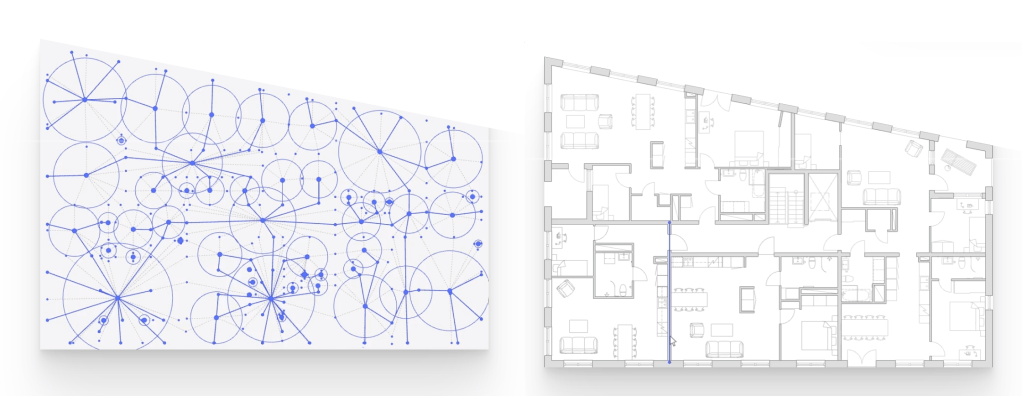
Note: Diagrams from Finch website
A similar tool is Architectures, an algorithm that helps Architects have variations in their plans based on inputs that they indicate. For every iteration of those inputs a specific output.
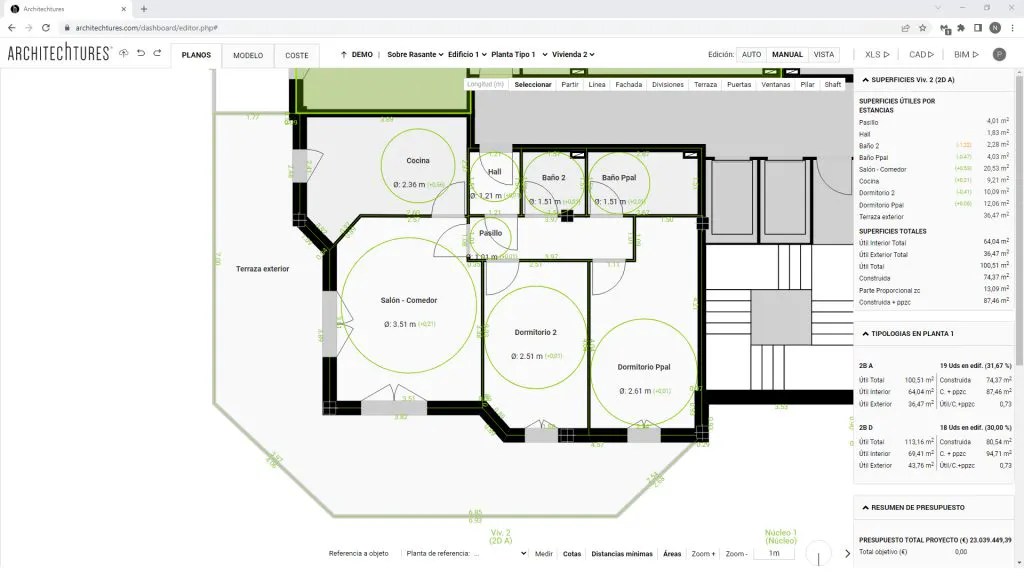
Note: Diagram from Architectures Website
This process of working with the tool is changing the way Architects design. From designs that were based on intuition and vision translated through drawings to data driven decisions with endless amount of iterations reacting to different data inputs by the user.
Architecture, the art, and science of designing buildings, structures and spaces according to the requirements, shifts from being based on intuition and analysis to being based on concrete data and evidence making it more scientific than artistic.
In traditional programming, the output of a program is reproducible and guaranteed. For example, if you write a Python program that reverses a string, you know that an input of the word “banana” will always return an output of “ananab.” Similarly, if there’s a bug in your program causing it to incorrectly reverse strings containing numbers, you could send the program to a colleague and expect them to be able to reproduce the error with the same inputs you used (unless the bug has something to do with the program maintaining some incorrect internal state, differences in architecture such as floating point precision, or differences in execution such as threading).
Machine learning models, on the other hand, have an inherent element of randomness. When training, ML model weights are initialized with random values. These weights then converge during training as the model iterates and learns from the data. Because of this, the same model code given the same training data will produce slightly different results across training runs. This introduces a challenge of reproducibility. If you train a model to 98.1% accuracy, a repeated training run is not guaranteed to reach the same result. This can make it difficult to run comparisons across experiments.
Design patterns, Introduced into Architecture by Christopher Alexander, and five coauthors depicted 253 patterns that can be used in Architecture, resulting in different outputs every time it is used depending on the site and its conditions. Each pattern describes a problem which occurs repeatedly in our environment, and then describes the core of the solution to that problem, in such a way that you can use this solution a million times over, without ever doing it the same way twice [9].
Each solution is stated in such a way that it gives the essential field of relationships needed to solve the problem, but in a very general and abstract way—so that you can solve the problem for yourself, in your own way, by adapting it to your preferences, and the local conditions at the place where you are making it [9].
For example, a couple of the patterns that incorporate human details when building a home are Light on Two Sides of Every Room and Six-Foot Balcony. Think of your favorite room in your home, and your least-favorite room. Does your favorite room have windows on two walls? What about your least-favorite room? According to Alexander:
Rooms lit on two sides, with natural light, create less glare around people and objects; this lets us see things more intricately; and most important, it allows us to read in detail the minute expressions that flash across people’s faces….
Having a name for this pattern saves architects from having to continually rediscover this principle. Yet where and how you get two light sources in any specific local condition is up to the architect’s skill. Similarly, when designing a balcony, how big should it be? Alexander recommends 6 feet by 6 feet as being enough for 2 (mismatched!) chairs and a side table, and 12 feet by 12 feet if you want both a covered sitting space and a sitting space in the sun [9].
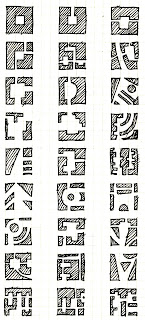
Christoper Alexander design pattern
Building production machine learning models is increasingly becoming an engineering discipline, taking advantage of ML methods that have been proven in research settings and applying them to business problems. As machine learning becomes more mainstream, it is important that practitioners take advantage of tried-and-proven methods to address recurring problems [9].
In designing, AI-assisted parametric design has emerged as an innovative approach to creating complex building designs tailored to specific objectives. Based on various parameters, including building materials and spatial limitations, AI models can code a design by programming the geometric rules [7].
Computer Vision, a subset of Machine Learning can as well help Architects in representing the real space in a virtual world. By augmenting any camera with computer vision, architects can autogenerate floorplans and CAD models by capturing images of existing physical spaces. This technology is currently being tested for use in architectural mapping, allowing architects to better understand an existing building before proceeding with construction or renovation work, impacting and improving the design process through a better understanding of the present conditions optimizing future decisions.
Point cloud algorithms are a way to understand the 3D shape of an object or room, with many use cases in architecture and engineering. They work by taking pictures of an object from many different angles and then combining all of the pictures into one 3D image. Point clouds can be used to create a model of an object, or to analyze the distance between objects.
Then these point clouds can be used extract many details through applying different Machine Learning algorithms for Segmentation, Classification, Object Recognition, Feature Extraction[11].
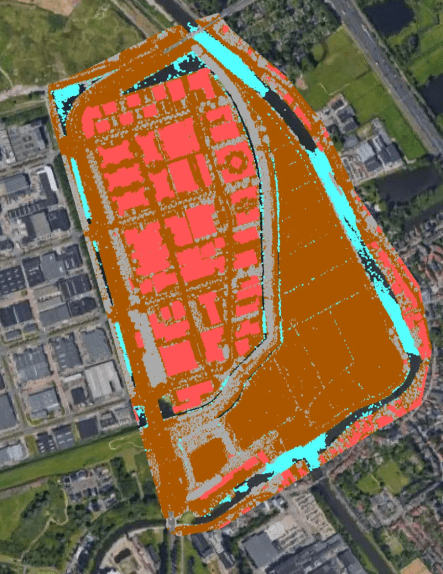
Note: this figure was produced by Batran showing how to extract different features from a point cloud [12].
AI and machine learning models in Architecture are gaining an exponential importance and reliability in the field from planning to construction phase. This merger is yet to lead to better outcomes, with the advancements in technology and various Machine learning algorithms, the potential of the work will grow when uncovering new potentials, easing the workload of an Architect and allowing them to focus on doing better Architecture. Design tools will evolve to incorporate more intelligent features. Moreover, Architects can expect these tools to grow with them, adapting to their unique methods and preferences over time. It’s all about making the creative workflow smoother and more efficient. ML algorithms will be integrated into design software to automate routine tasks, suggest design improvements, and enhance the overall design process. Nevertheless, With the assistance of machine learning, architects will leverage vast amounts of data to inform and validate design decisions. This shift will result in a more scientific approach to architecture, combining artistic vision with concrete data and evidence, moving decisions from having an intuitive background to a more scientific data driven approach.
The integration of machine learning with simulation tools will provide architects with predictive capabilities. Machine learning algorithms can analyze and learn from simulation results, accelerating complex simulations and allowing architects to foresee how new systems would behave based on precedent data.
Up to today Machine Learning Algorithms are just bound to just 2D integration in the field of Architecture. This relationship is yet to advance to 3D integration, moving from just image representation to 3D models. Machine learning will play a significant role in generative design processes, creating various design options based on specified parameters and inputs while optimizing for various criteria.
The future might bring about a collaboration where architects and machine learning algorithms inspire each other, opening doors to unforeseen design possibilities.
In the future, architects and machine learning algorithms will collaborate in a symbiotic relationship. Architects provide a human touch, guiding the algorithms with insights into design nuances. Meanwhile, machine learning algorithms, adept at processing vast data, offer rapid iterations and data-driven suggestions. This partnership goes beyond assistance, fostering a co-creative process where architects gain inspiration from algorithmic outcomes, pushing the boundaries of design. Ultimately, this synergistic future represents a harmonious blend of human creativity and artificial intelligence, redefining the possibilities within architecture.
Conclusion:
Architecture, a profession that has always been on the streamline of advancements, pushing boundaries to achieve more is now in an intertwined relationship with Machine Learning, further expanding boundaries and limitations to an
In conclusion, the evolution of architecture, intricately interwoven with technological advancements, has undergone transformative shifts, with Machine Learning (ML) emerging as a pivotal force in the architect’s toolkit. From its roots in Parametric Design to the present era of AI-assisted Generative Design, ML has propelled architecture into an era of unprecedented possibilities. The seamless integration of ML into design processes, coupled with its ability to generate diverse iterations swiftly, marks a significant departure from traditional intuition-based practices.
As ML continues to advance, the paper envisions a future where 3D integration becomes the norm, expanding from image representation to intricate 3D models. The role of ML in generative design processes is poised to grow, offering architects a spectrum of design options based on specified parameters. This convergence of architecture and ML holds the promise of not only streamlining workflows but also fostering innovative and sustainable architectural solutions. In essence, ML is not merely a tool but a transformative force shaping the very essence of architecture. The architects of the future, armed with intelligent design tools, will navigate a landscape where the boundaries of creativity and efficiency are continually pushed, ensuring a dynamic and adaptive future for the field of architecture.
References:
1.Jutraz, A.; Zupancic, T. The role of architect in interdisciplinary collaborative design studios. Theory Pract. Spat. Plan. 2014, 2, 34–42. [CrossRef]
2. Avermaete, T.; Teerds, H. The Roles of the Architect Toward a Theory of Practice. In The Role of the Architect, 1st ed.; Frausto, S., Ed.; Delft University of Technology: Delft, The Netherlands, 2016; pp. 7–11.
3.Bhattacherjee, Souktik. “A Brief History of Computational Design – RTF: Rethinking the Future.” RTF | Rethinking The Future, February 16, 2021. https://www.re-thinkingthefuture.com/art-history-of-architecture/a2466-a-brief-history-of-computational-design/#:~:text=The%20first%20era%20to%20use,commercial%20use%20of%203D%20models.
4.mo, J. (2017, August 17). Types of machine learning algorithms you should know. Medium. https://towardsdatascience.com/types-of-machine-learning-algorithms-you-should-know-953a08248861
5.AI in architecture: 10 use cases, Examples & Technologies. AI in Architecture: 10 Use Cases, Examples & Technologies. (n.d.). https://www.itransition.com/ai/architecture#:~:text=Using%20generative%20adversarial%20networks%20(GANs,over%20time%2C%20further%20improving%20workflows.
6.How AI and ML are changing the future of design in architecture?. All House Related Solutions. (n.d.). https://gharpedia.com/blog/ai-ml-in-architecture-design/
7.Lakshmanan, V., Robinson, S., & Munn, M. (n.d.-b). Machine Learning Design Patterns. O’Reilly Online Learning. https://www.oreilly.com/library/view/machine-learning-design/9781098115777/ch01.html
8.Koch, R. (2023, May 2). History of machine learning – A journey through the timeline. clickworker.com. https://www.clickworker.com/customer-blog/history-of-machine-learning/#:~:text=The%20field%20of%20machine%20learning,in%201959%20while%20at%20IBM.
9.Boesch, G. (2023, November 9). 16 applications of Computer Vision in Construction (2024 guide). viso.ai. https://viso.ai/applications/computer-vision-in-construction/#:~:text=Computer%20vision%20is%20used%20for,use%20of%20materials%2C%20and%20more.
10.Batran. (2021, November 16). A GIS pipeline for Lidar Point Cloud Feature Extraction. Medium. https://towardsdatascience.com/a-gis-pipeline-for-lidar-point-cloud-feature-extraction-8cd1c686468a

